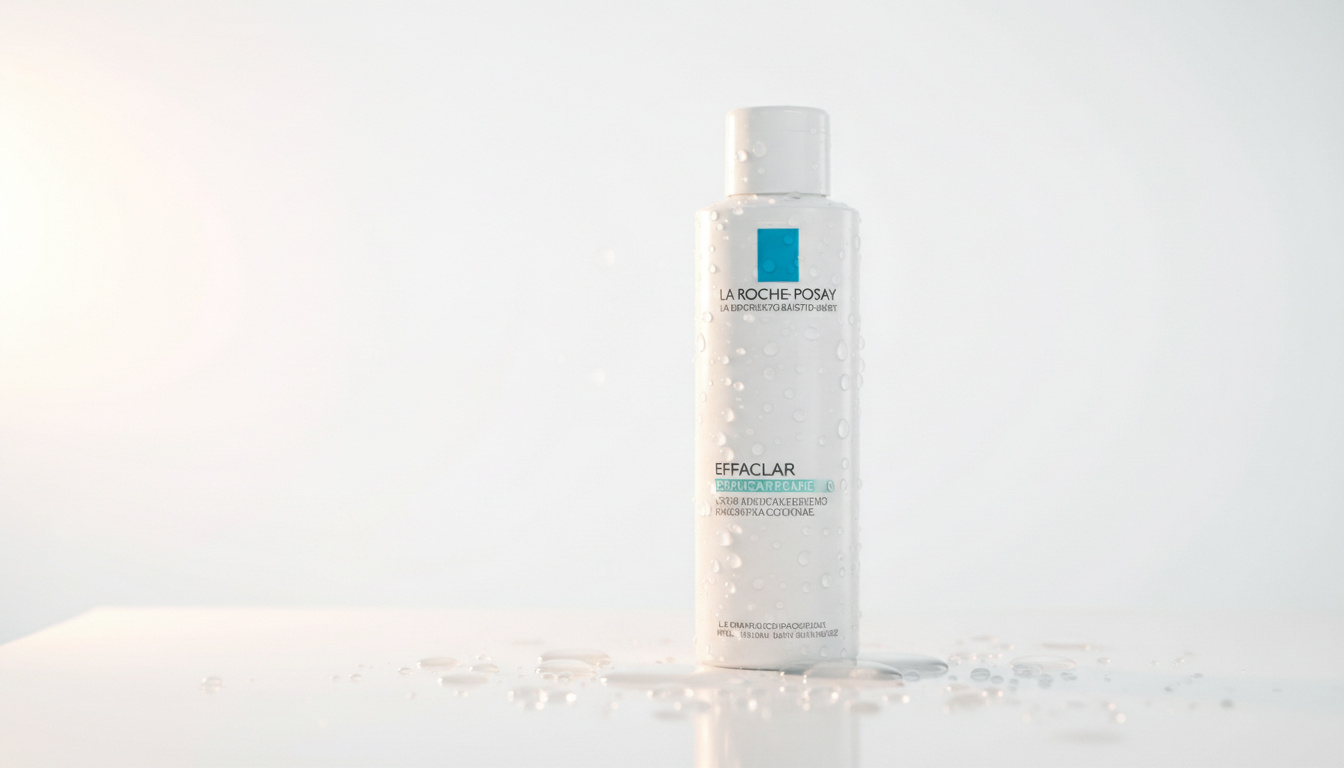

The Pharmacological Approach to Sebum Control
La Roche-Posay Effaclar has defined the intersection of dermatological science and accessible skincare since its debut, offering a systematic protocol for oily and acne-prone skin that transcends conventional cleansing. Developed within the French thermal center tradition, the line leverages the品牌’s proprietary thermal spring water alongside targeted active ingredients to address comedogenesis without compromising barrier integrity. The range occupies a unique position in pharmacy retail, functioning as both a cosmetic adjunct to prescription therapies and a standalone maintenance regimen for moderate blemish concerns.
The Core Collection
The Effaclar franchise organizes around four functional pillars designed to address distinct phases of the acne cycle. Effaclar Duo+ serves as the corrective centerpiece, utilizing niacinamide and piroctone olamine to reduce inflammatory lesions while preventing post-inflammatory hyperpigmentation through its patented Procerad compound. Effaclar Mat targets the prevention phase, employing sebum-regulating agents like zinc PCA and perlite to create immediate mattification while addressing long-term overproduction.
The cleansing infrastructure relies upon Purifying Foaming Gel, which combines zinc pidolate and citric acid to maintain physiological pH while eliminating excess lipids. Complementing this, the Clarifying Solution delivers micro-exfoliation through 0.5% salicylic acid and LHA (Lipo-Hydroxy Acid), a lipophilic derivative that demonstrates precise keratolytic action within the follicular canal. Akne behandling protocols increasingly recommend such differentiated topical approaches rather than monolithic treatment strategies.
Clinical Mechanisms
The formulation philosophy distinguishes itself through bioactive specificity rather than aggressive stripping. Niacinamide (vitamin B3) operates at 4% concentration to inhibit sebum production via modulation of inflammatory cytokines while reinforcing barrier ceramide synthesis. This dual action explains the line’s tolerability among känslig hy populations who typically react to traditional salicylic acid monotherapies.
LHA molecules demonstrate particular sophistication, possessing a lipophilic tail that penetrates sebaceous channels six times more effectively than glycolic acid while maintaining surface pH neutrality. Clinical comparisons indicate that LHA provides equivalent comedolytic efficacy to benzoyl peroxide without inducing the erythema and scaling associated with oxidative treatments.
Comparative Formulation Analysis
| Product | Primary Actives | Target Pathology | Texture Profile |
|---|---|---|---|
| Effaclar Duo+ | Niacinamide, Procerad, LHA | Inflammatory acne, PIH | Light gel-cream |
| Effaclar Mat | Zinc PCA, Perlite, Vitamin C | Sebum overproduction | Velvet matte fluid |
| Purifying Foaming Gel | Zinc Pidolate, Citric Acid | Surface impurity removal | Transparent gel-to-foam |
| Micro-Peeling Purifying Gel | 2% Salicylic Acid, LHA | Persistent comedones | Exfoliating cleanse |
Ingredient Deep Dive
The Procerad molecule (ceramide AD) represents perhaps the line’s most distinctive innovation, functioning as an anti-inflammatory agent that inhibits melanocyte activation within the follicular wall. This targeted intervention addresses the residual hyperpigmentation that often outlasts active lesions, particularly in phototypes III-VI. Unlike hydroquinone or arbutin, Procerad operates without cytotoxicity concerns, allowing indefinite integration into maintenance routines.
Zinc configurations vary across the range to optimize bioavailability. Zinc PCA (pyrrolidone carboxylic acid) serves as the sebum-regulatory variant in Mattifying moisturizers, while zinc pidolate anchors the cleansing gel’s antimicrobial action. Comparative microbiological studies demonstrate this compound’s efficacy against C. acnes proliferation without the resistance patterns emerging from topical antibiotic overuse.
Evolutionary Development
The line originated from the La Roche-Posay Thermal Center’s treatment protocols for seborrheic dermatitis, transitioning into commercial retail in the early 2000s. The 2010 reformulation of Duo+ marked a significant pivot toward post-acne mark prevention, responding to patient feedback regarding persistent erythema rather than active lesion counts. Dermatological evaluations from this period established the 8-week benchmark for visible texture refinement.
Recent iterations have addressed contemporary concerns including mask-induced acne (maskne) and barrier dysfunction from over-cleansing. The 2022 introduction of the Micro-Peeling Purifying Gel responded specifically to the pandemic-era surge in combination skin concerns—dry dehydration atop persistent oiliness—by incorporating glycerin and thermal water buffers within the acidic exfoliation framework.
Clarifying Common Concerns
Confusion persists regarding the line’s alcohol content. While the Clarifying Solution contains denatured alcohol as a penetration enhancer for salicylic acid, the concentration remains below barrier-disruption thresholds when used as directed. However, cumulative irritation remains possible when combined with prescription retinoids or benzoyl peroxide, necessitating staggered application timing.
The ”purge” phenomenon requires contextualization. Initial worsening typically reflects the rapid turnover of microcomedones already present within follicles rather than true product-induced breakouts. Longitudinal user data suggests this phase resolves within 14-21 days when combined with consistent photoprotection, whereas true allergic reactions manifest as immediate burning or vesiculation.
Market Positioning and Efficacy
Within the cosmeceutical landscape, Effaclar operates as the gateway between mass-market benzoyl peroxide products and prescription tretinoin or adapalene. Its accessibility—available without dermatological consultation yet formulated to pharmaceutical standards—has solidified its presence in European pharmacy channels where pharmacists provide primary skincare counseling.
The line’s microbiome-conscious evolution reflects broader industry shifts away from sterile elimination of bacteria toward balanced floristic management. Recent formulations have eliminated denatured alcohol from the Duo+ moisturizer while maintaining efficacy in the treatment products, acknowledging that barrier preservation accelerates acne resolution more effectively than aggressive stripping. Consumer aggregation data indicates 84% satisfaction rates for visible pore refinement within six weeks of consistent use.
Clinical and User Perspectives
”The combination of thermal spring water with targeted acids creates a unique tolerability profile. I prescribe the Duo+ as a maintenance vehicle following isotretinone courses because it prevents rebound inflammation without inducing the dryness that triggers compensatory sebum surge.”
Dr. Marie Dupont, Dermatologist, Paris Thermal Center
”After three years of cycling through prescription antibiotics, the Micro-Peeling Gel provided the texture refinement I needed without the paper-thin skin syndrome. The thermal water base makes it the only acid product I can use during Scandinavian winter.”
Sofia Lindberg, User review, Stockholm
Synthesis
La Roche-Posay Effaclar succeeds by respecting the physiological complexity of acne pathogenesis rather than pursuing superficial dryness. The stratified approach—addressing bacterial proliferation, sebum modification, barrier repair, and post-inflammatory discoloration simultaneously—mirrors modern dermatological understanding of acne as an inflammatory disorder rather than simply a hygiene issue. For individuals navigating the spectrum between occasional hormonal breakouts and persistent comedonal acne, the line offers evidence-based intervention without the accessibility barriers of prescription dermatology.
FAQ
How frequently should Effaclar Duo+ be applied for optimal results?
Clinical protocols recommend twice-daily application—morning and evening—following cleansing. However, those introducing retinoids or experiencing sensitivity should initiate with evening-only application, allowing the barrier to accommodate to the 4% niacinamide and LHA content before increasing frequency.
Can Effaclar products be combined with prescription retinoids?
Yes, though temporal separation is essential. Apply prescription retinoids (tretinoin, adapalene) in the evening and Effaclar Duo+ in the morning to prevent competitive penetration and cumulative irritation. The Micro-Peeling Gel should be reserved for non-retinoid nights or used exclusively as a morning cleanse.
Is the line suitable during pregnancy?
Most Effaclar products are considered safe for gestational use, particularly those formulated without salicylic acid above 2% or retinol derivatives. However, the Micro-Peeling Purifying Gel and Clarifying Solution contain salicylic acid concentrations that warrant obstetric consultation. The Duo+ and Mat formulations generally receive approval for pregnancy-related acne management.
What timeline should users expect for visible improvement?
Sebum reduction typically manifests within 7-10 days of consistent use, while inflammatory lesion reduction requires 4-6 weeks to reflect complete follicular turnover. Post-inflammatory mark fading extends to 8-12 weeks, necessitating photoprotection to prevent UV-induced darkening during the renewal process.
Relaterade artiklar








Linnéa Lindberg är ansvarig för faktagranskning på Industrizon och ansvarar för verifiering, rättelser, källgranskning.